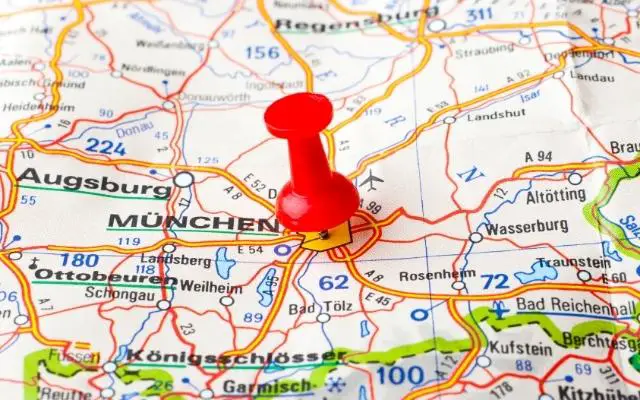
No, Munich is not Germany’s capital. Berlin holds that role. Munich is the capital of Bavaria, and “Germany’s secret capital” is an informal nickname for the city’s economic and cultural influence. You will hear the expression, but you will not find a second national government hiding behind Marienplatz.
Updated
| Quick fact | Details |
|---|---|
| Germany’s capital | Berlin |
| Bavaria’s capital | Munich |
| Secret capital | An informal nickname, with no official status |
| Kingdom of Bavaria | 1806 to 1918. Bavaria joined the German Empire in 1871. |
I understand the appeal of the nickname. Munich brings together the headquarters of major businesses, royal buildings, universities, museums and a distinctly Bavarian way of enjoying the day. Our original article looked at why the city punches above its size. The interesting part is how those different sides fit together.
Why Munich gets called Germany’s secret capital
Munich has a presence well beyond southern Germany. Mention BMW, Oktoberfest or Bayern Munich overseas and people recognise the connection. Business visitors arrive for trade fairs, football supporters for matches and travellers for museums, beer gardens and trips towards the Alps.
Walking through the centre, I find the contrast between working city and former royal capital part of its appeal. A morning around the Residenz looks different from an afternoon near BMW’s headquarters. Both belong to Munich. The parks, markets and neighbourhood restaurants give you reasons to spend time between the headline sights.
The nickname expresses an impression of influence and confidence. People use similar informal descriptions for cities elsewhere. There is no constitutional status attached to this one, and no official contest in which Munich has beaten Berlin.
Our guide to what Munich is famous for covers those better-known associations in more detail, including the 1972 Olympics and the city’s brewing traditions.
The businesses behind Munich’s reputation
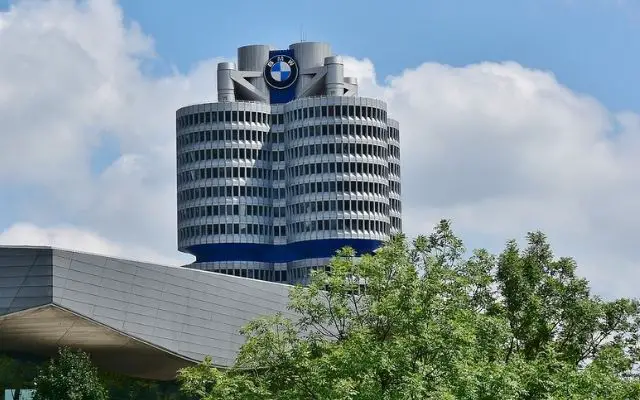
BMW is the obvious example, especially when its four-cylinder headquarters appears in the same view as the Olympic site. The BMW Museum and BMW Welt make the company’s story visible to visitors who have no reason to enter an office or factory.
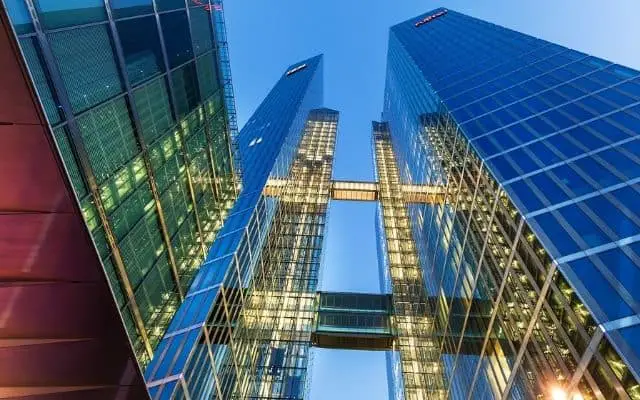
Other major names include Allianz, Munich Re and Siemens. Their presence helps explain why the city attracts conferences, specialist work and international residents. Munich’s economic identity also includes universities, research institutions and smaller technology businesses. A list of household names tells only part of the story.
Audi belongs in a wider Bavarian discussion, with its headquarters in Ingolstadt. Putting every successful Bavarian manufacturer inside Munich would give you the wrong geography.
Business travel also shapes the practical side of a visit. A large fair at Messe München changes demand for hotel rooms. If accommodation looks unexpectedly expensive, compare your dates with the fair calendar before assuming those prices apply throughout the year.
Was Munich ever the capital of Germany?
Munich was the capital of the Kingdom of Bavaria. Bavaria became a kingdom in 1806 and the monarchy ended in 1918. During those years, Munich’s rulers commissioned or expanded many of the buildings you see around the city today.
Bavaria joined the German Empire in 1871, retaining its monarchy within the new state. Joining the empire did not turn Munich into the capital of Germany. Nor did Bavaria cease to be a kingdom in 1871.
For visitors, the Munich Residenz is a useful place to understand this distinction. Its rooms and collections tell the story of the Wittelsbach rulers. The nearby Hofgarten and the city’s royal avenues place the palaces within a larger capital-city setting.
The history also explains why references to “capital” need context. A Bavarian state capital, a former royal residence and a modern national capital are different roles. Munich has held the first two. Berlin is the national capital named in Article 22 of Germany’s Basic Law.
Munich’s political history needs clear language
Munich’s association with the Nazi movement is another part of its history. Hitler and the Nazi Party established an early base here, and the failed putsch of November 1923 ended near the Feldherrnhalle. The Nazi regime later promoted Munich as the “Capital of the Movement”.
This was a Nazi designation, not evidence of Munich serving as Germany’s national capital. Describing the city as a generic “capital of socialism” would also confuse movements and events with different histories.
For an introduction grounded in evidence, visit the Munich Documentation Center for the History of National Socialism. Its location near Königsplatz gives you a reason to look more closely at an area often visited for its art museums and architecture.
What Munich is the capital of today
Munich is the seat of Bavaria’s state government. The Bavarian State Chancellery, beside the Hofgarten, is one visible reminder. You will also find the Bavarian parliament in the Maximilianeum across the Isar.
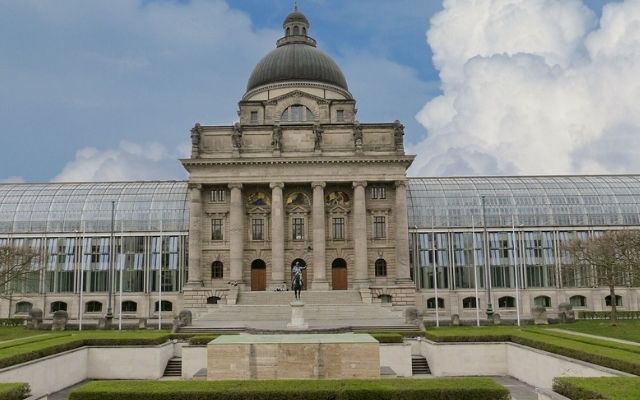
These are Bavarian institutions. They make Munich important within Germany’s federal structure, where the states have their own governments and responsibilities. They do not replace the national institutions in Berlin.
The distinction carries through to everyday symbols. Munich’s city colours are black and gold. Bavaria’s state colours are white and blue. You will see both around the city, particularly at civic and traditional events. Our Munich flag guide explains how to tell them apart.
A city worth visiting on its own terms
For me, the strongest reason to visit Munich is the range within reach. You have the Old Town and royal collections, the English Garden, neighbourhood cafés, football and trips towards Bavaria’s lakes. You do not need to rank Munich against every other German city to enjoy those things.
If you have a short visit, start with our one day in Munich itinerary. If you have longer, leave time for places away from Marienplatz. The nickname makes an interesting conversation. The city gives you much more to spend your time on.