
Munich is famous for Oktoberfest, its brewing traditions, the 1972 Olympics, the English Garden, BMW, the Hofbräuhaus and the Deutsches Museum. Our eighth choice is the city’s approach to green space and sustainable travel, something you notice between the better-known attractions when spending time here.
Updated

| Quick fact | Details |
|---|---|
| Festival | Oktoberfest 2027: 18 September–3 October |
| Olympic legacy | The 1972park and sporting history, with current access restrictions |
| Food and drink | Munich beer traditions and Hofbräuhaus |
| Outdoors | English Garden, parks and cycle routes |
| Technology | BMW Welt/Museum and Deutsches Museum |
| Travel style | Walk and use public transport between city sights |
These were the eight themes in our original guide, chosen to explain why Munich is so well known rather than rank every attraction in the city. Some are places to visit, others are traditions or events. Together they give a more useful picture than treating Bavaria’s capital as a single beer festival.
1. Oktoberfest
Oktoberfest began with the celebrations for the marriage of Crown Prince Ludwig and Princess Therese in 1810. The name Theresienwiese, the festival grounds southwest of the centre, preserves the bride’s connection with the site.
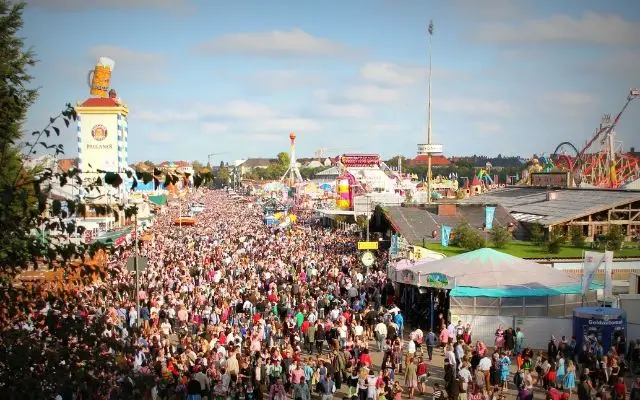
The annual event has grown into the association many people make first with Munich. Large beer tents are part of the attraction, but our original article also pointed to the rides, food stalls and entertainment spread across the grounds. You do not have to spend the entire visit seated inside a tent to understand why people enjoy the Wiesn.
For planning ahead, Oktoberfest 2027 runs from 18 September to 3 October. The dates matter more than the name: most of the festival happens in September. Do not book an arbitrary October weekend and expect the tents to be open.
Beer comes from the six participating Munich breweries, served in the familiar litre Maß. Food, fairground rides and individual tent arrangements all have their own prices and conditions. A table reservation and admission to the grounds are different questions.
Book accommodation early if the festival is the reason for your trip, then plan some time elsewhere in Munich. The city does not disappear when the festival starts, and the quieter streets and parks often provide a welcome change of pace after the grounds.
2. The 1972 Munich Olympics
The 1972 Summer Olympics gave Munich architecture and public spaces which remain part of the city today. The tented roofs around the stadium and halls still look distinctive, particularly when seen across the landscaped park.
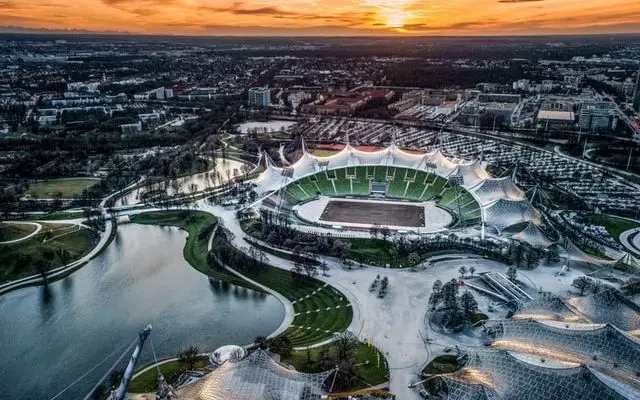
Our original article explored several reasons the Games remain remembered. Mark Spitz won seven swimming gold medals, each with a world record. The Soviet Union’s 51–50 win over the United States in the men’s basketball final became one of Olympic basketball’s most disputed results. The sporting stories give the site a place in international memory beyond Munich itself.
The Games are also inseparable from the terrorist attack of 5 September 1972 and the murder of 11 members of the Israeli team. A German police officer was also killed during the failed rescue. This history needs care and remembrance, rather than treatment as another entertaining Olympic anecdote.
For a visit, distinguish the open park from individual buildings and attractions. The Olympic Tower is closed for renovation, with the operator currently expecting reopening from October 2027. Stadium and roof works also affect access. Check the Olympiapark’s current information before choosing a tour or promising yourself a tower view.
The park still gives you room for a walk and a look at the wider Olympic setting. Its lasting public use is one reason we included the Games among the things Munich is famous for, rather than treating 1972 as a date with no connection to today’s visitor.
3. Munich beer and brewing traditions
Munich’s beer reputation predates Oktoberfest. Breweries, beer halls and beer gardens connect the drink with the city’s history and with the practical business of getting together for a meal.
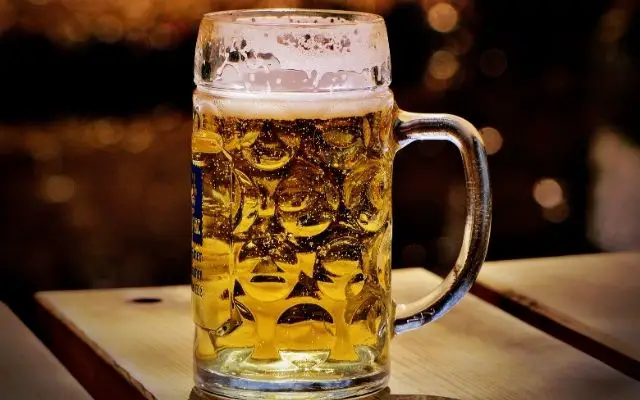
The six Munich breweries associated with Oktoberfest are Augustiner, Hacker-Pschorr, Hofbräu, Löwenbräu, Paulaner and Spaten. Seeing those names around town helps you recognise which beer a particular hall or garden serves.
The beer-garden setting is as much part of the attraction as the glass. Shared tables, self-service areas and traditional dishes create a social experience you do not get by ticking a brewery name off a list. Check the individual garden’s arrangements if you want to bring your own food, since the traditional self-service area differs from a restaurant terrace.
Our original discussion also mentioned the purity-law tradition. Munich’s brewing rules and Bavaria’s 1516 Reinheitsgebot belong to that story, but modern brewing and labelling are more complicated than saying every German beer has followed one unchanged recipe for centuries.
Try styles according to your taste rather than assuming every local beer is identical. A Helles, a wheat beer and a seasonal strong beer offer different experiences. If you are here for a strong-beer event, use the Starkbierfest guide for the specific venue dates rather than expecting a permanent citywide festival.
And yes, we still think Munich makes finding a beer you enjoy a pleasant task. Take time over the food and company as well. Those are part of why the tradition works.
4. The English Garden
The Englischer Garten stretches north from the central city into a much larger green space than a first glance suggests. It is bigger than New York’s Central Park and London’s Hyde Park, with different areas for a short stroll or a longer walk.
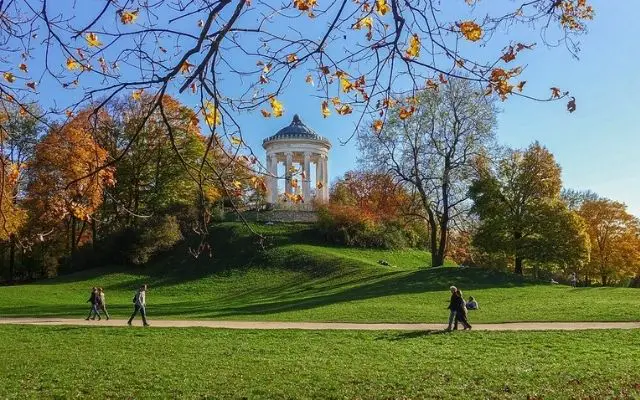
The southern section brings together several of the familiar landmarks: the Monopteros, broad meadows and paths leading towards the Chinese Tower. Farther north, the park feels quieter and less tied to the route taken by most short-stay visitors.
The Chinese Tower’s large beer garden was a focal point of our original article. Music, shared tables and the smell of food make the area a popular summer stop. The tower itself is not a public observation tower to climb. Use our Chinese Tower guide to check the seasonal beer-garden and event arrangements.
The park also has streams, bridges and the Kleinhesseloher See. Choose a route with those different settings rather than walking to one entrance and assuming you have seen the whole garden. The size explains why local people use it for exercise and ordinary time outdoors as well as sightseeing.
Munich’s river-surfing image is another familiar association, particularly at the Eisbach. Water conditions, restrictions and access change, and watching experienced surfers is a different proposition from deciding to enter the water yourself. Check the current local notice if the wave is a reason for your visit.
For us, the English Garden earns its place because it lets you change pace without leaving Munich. A busy Old Town morning and a park afternoon fit naturally into the same day.
5. BMW headquarters, BMW Welt and the BMW Museum
BMW is one of Munich’s most recognisable business names. The letters stand for Bayerische Motoren Werke, or Bavarian Motor Works. The company’s roots in aircraft engines and its later motorcycles and cars give the museum a wider story than a display of current showroom models.
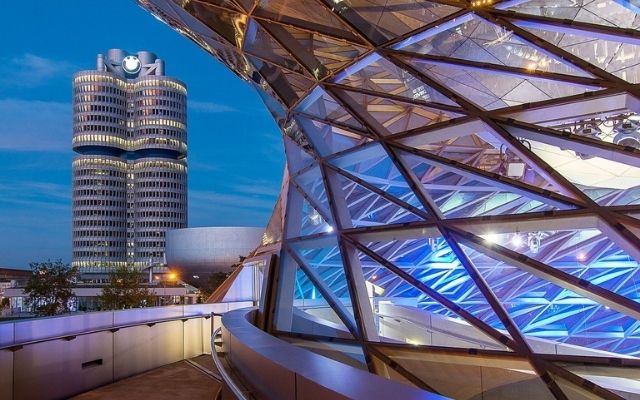
There are three different things to recognise on arrival. The four-cylinder building is the corporate headquarters. BMW Welt is the modern visitor and vehicle-delivery building. The BMW Museum covers the company’s history and vehicles. They stand close together, but they are not interchangeable names for the same attraction.
Car enthusiasts naturally find plenty to look at here. Our original guide also recommended the complex more broadly because the architecture and presentation give other visitors something to enjoy. Allow different amounts of time for a look around BMW Welt and a proper museum visit.
Use BMW’s official visitor information to check hours, admission and any special arrangements. Tours and museum entry need their own booking checks. An open showroom-style public space does not mean every experience in the complex is free or available without a reservation.
The location beside Olympiapark makes the two places a sensible pairing. You avoid crossing the city between stops and see two different expressions of modern Munich: an Olympic park and the public face of a global manufacturer.
6. Hofbräuhaus Munich
The Hofbräuhaus at Platzl is one of the beer halls visitors know by name before arriving. Hofbräu’s origins go back to Duke Wilhelm V’s brewery founded in 1589, with the brewery moving to this part of the city in the early seventeenth century.
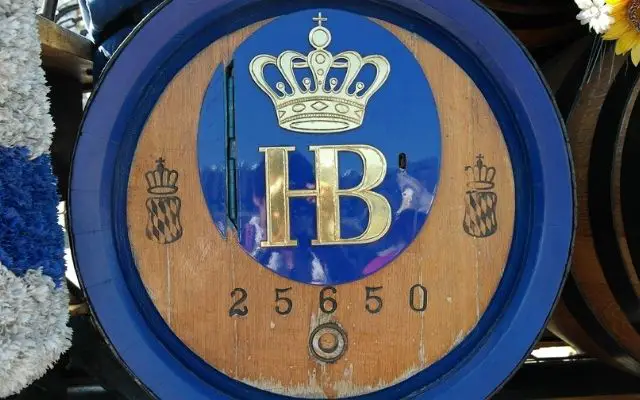
Inside, the painted ceilings, large shared tables, music and beer-hall food create a setting which has become an international shorthand for Munich. Namesake venues abroad help spread the association, though visiting one overseas is a different experience from walking into the original Munich location.
Our original verdict was frank about how touristy the place feels. We still include it because being well known is part of the appeal. You come for the hall, the atmosphere and a recognisable Bavarian setting, with dishes such as Schweinshaxe alongside the beer.
There are regular local customers here too. The venue’s own history describes its Stammtisch tradition and thousands of registered regulars. It would be wrong to tell you only tourists use the hall or that a local connection has vanished because visitors fill many of the tables.
Consider whether you want a full meal, a short drink or a quieter restaurant setting elsewhere. Our wider food guides help you compare. The Hofbräuhaus website gives the history and current visitor routes, without needing to rely on anecdotes about every famous person said to have visited.
7. The Deutsches Museum
The Deutsches Museum, on Museum Island in the Isar, is central to Munich’s science-and-technology identity. It is a place to give a curious mind several hours rather than a quick stop between churches.
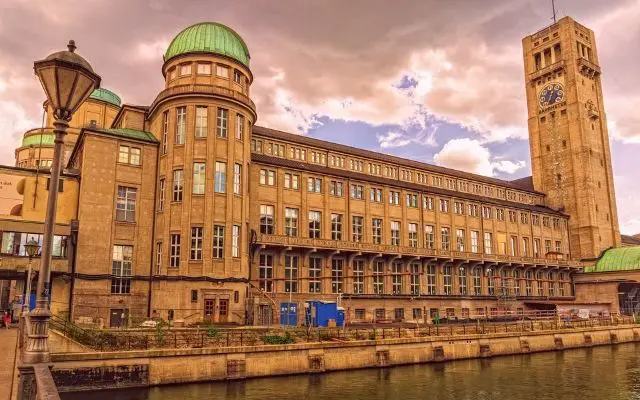
Our original article highlighted both the collections and the museum’s research role. Machines and historic objects tell part of the story. Explanations, demonstrations and the connections between subjects make the visit worthwhile for people who do not arrive as engineering specialists.
Choose the subjects you most want to see. A large museum is easier to enjoy when you allow time for a few galleries than when you hurry past everything trying to complete the building. Families should also compare the available children’s and hands-on activities with their group’s ages.
The museum is being modernised in stages. Open galleries remain available, but you should use the current visit information rather than an old floor plan promising every collection. The project currently anticipates full reopening in 2028.
There are separate branches, including the Verkehrszentrum and Flugwerft Schleißheim. Check the location when booking or planning a specific collection. “Deutsches Museum” on an article heading does not put every transport and aviation exhibit on the island.
This is one of the places I would consider when bad weather changes a day in Munich. The subject matter gives the city another dimension alongside royal architecture, beer and festivals.
8. Green space and a more sustainable way to visit
Our final original theme was sustainability. Some of this is immediately visible: parks, cycle routes, pedestrian shopping streets and a public-transport network which lets visitors do a city break without hiring a car.

The energy story needs a more precise explanation than a claim that Munich became entirely powered by clean energy in 2025. Stadtwerke München reports reaching its renewable-electricity generation target on an annual accounting basis. This compares production from its renewable installations with the city’s electricity use. It does not mean every building, vehicle and heating system runs on renewable energy at every hour.
The distinction matters, and the SWM explanation sets out the project. Energy production is one part of a city’s environmental work, alongside heat, transport and other services.
For a traveller, the practical choices are straightforward. Walk between connected Old Town sights, use public transport for the longer trip and choose a bicycle when the route and conditions suit you. Our getting around Munich guide compares the options, including the current bike-sharing system.
We enjoy the amount of outdoor space Munich gives its residents and visitors. A city walk is not an environmental audit, though. Clean-looking streets and a pleasant afternoon in a park do not prove every environmental problem has been solved.
Other things Munich is known for
FC Bayern, the royal palaces, the Frauenkirche’s twin domes and the Glockenspiel add more familiar associations. Our Munich landmarks guide covers monuments and sculptures, and the football guide looks beyond Bayern to the city’s other clubs.
Munich’s Nazi history also needs a place in an informed visit. The Documentation Center provides the historical context more responsibly than a casual reference to the city’s notoriety. Keep time for this subject if you want to understand more than the attractive façades.
You do not need to fit every theme into one trip. Pick the ones which matter to you, then leave time for the ordinary pleasures between them: a market lunch, a neighbourhood café or a walk along the Isar. That variety is the Munich we wanted our original list to convey.