
Bavarian food is known for roast pork, sausages, dumplings and bread, with plenty of regional dishes beyond the familiar beer-hall plate. In Munich, start with Weißwurst, a pretzel and sweet mustard in the morning. For lunch or dinner, look for Schweinsbraten, Schweinshaxe, Käsespätzle or a Brotzeit of bread and cheese.
Updated
Quick Facts
| Quick fact | Details |
|---|---|
| Breakfast to try | Weißwurst, Brezn and sweet mustard. Weißbier is the traditional beer pairing. |
| Roast dishes | Schweinsbraten is sliced roast pork. Schweinshaxe is the roasted knuckle. |
| Dumplings | Semmelknödel use bread. Kartoffelknödel use potato. |
| Quick lunch | Leberkäsesemmel, a slice of hot meatloaf in a bread roll. |
| Cheese choice | Obatzda with a pretzel, or Käsespätzle with cheese and onions. |
| Fish | Steckerlfisch, a whole fish grilled on a stick. |
| Useful menu word | Brotzeit: a small meal or snack, often with bread, cheese or cold meats. |

Regional food, taverns and royal tables
Hearty and filling describe much of the food associated with a Bavarian tavern. Roasted meats, potatoes, cabbage, bread and flour-based dishes appear repeatedly. The region also has lighter food, modern restaurants and a wider range of cooking than a visitor sees on one traditional menu.
Bavaria is a large state with different regional traditions. Franconian sausages, Allgäu cheeses and Munich’s Weißwurst belong within the same state without being interchangeable local specialities everywhere.
Court kitchens and neighbouring regions influenced food alongside household cooking, farming and tavern life. There is no need to credit the whole cuisine to one royal collection of recipes or to an explorer bringing dumplings from China. The useful history is the variety of places and people who developed and served these foods.

What makes a typical Bavarian meal?
Many traditional main dishes combine meat, a starch and gravy or vegetables. Pork knuckle with a dumpling and dark beer gravy is a familiar example. Cabbage appears in several forms, including fermented Sauerkraut, braised Bayerisch Kraut and fresh cabbage salad.
Bread matters beyond the main meal. A Brotzeit ranges from a simple pretzel and cheese spread to a larger board of cold cuts, cheese and vegetables. The word is not restricted to one invented snack between breakfast and lunch. You will see Brotzeit offerings at different times of day.
Taverns often use the name Wirtshaus. In a busy room or beer garden, sharing a table is common. Ask before sitting at an occupied table and check whether the section is table service or self-service.
The traditional Munich breakfast
The well-known breakfast combines Weißwurst, Brezn, sweet mustard and often Weißbier. This is a regional tradition to try, rather than an account of what every Bavarian eats before work each day.

Brezn: the pretzel
A fresh Brezn has a browned crust, soft interior and salt on the outside. Pretzels appear with snacks and meals throughout the day, so breakfast is only one opportunity to try one.
Plain bread or a roll also accompanies many dishes, but a pretzel is the familiar partner to the white sausage. Size varies, from an individual bakery pretzel to the much larger versions sold at festivals.
Weißwurst: the white sausage
The pale sausage is traditionally made with veal, pork fat and seasoning. Serve the sausage hot in water, then remove the casing before eating. A knife and fork make the process straightforward: slit the skin and lift the meat out.
Some traditionalists use the zuzeln method, drawing the meat from the casing. You do not need to master this to enjoy breakfast. Ask for help if the sausage arrives in a serving pot and you are unsure how to begin.
The saying about Weißwurst not hearing the noon bells reflects the morning custom. Modern kitchens have different serving hours, so order in the morning for the traditional experience. The familiar 1857 invention story is a local legend, with earlier sausage history behind the modern dish.
Sweet mustard and Weißbier
Bavarian sweet mustard is the usual condiment. Its sweet, coarse-grained character suits the mild sausage and salted pretzel. Recipes and brands vary, so beer and honey are not universal ingredients.
Weißbier, or wheat beer, is the traditional drink pairing. We enjoy the combination, but choose the drink which suits your day. Ordering breakfast does not oblige you to drink alcohol.
Our favourite main dishes to look for
Schweinsbraten and Schweinshaxe
Schweinsbraten is sliced roast pork, often served with a dumpling and gravy. Schweinshaxe is the knuckle, roasted with the skin on to produce crackling around tender meat.
Check the portion description before ordering. A whole knuckle is a different commitment from a serving of sliced roast pork. Some menus offer a half knuckle or sell the whole joint by weight.
Knödel
Dumplings are a regular accompaniment to meat and gravy. Semmelknödel use bread, while Kartoffelknödel use potato. Bread dumplings also work as a main dish with creamy mushrooms, often listed as Rahmschwammerl.
Sweet dumplings belong to a different part of the menu. Read the name and filling rather than assuming every Knödel is a side for roast meat.
Schnitzel
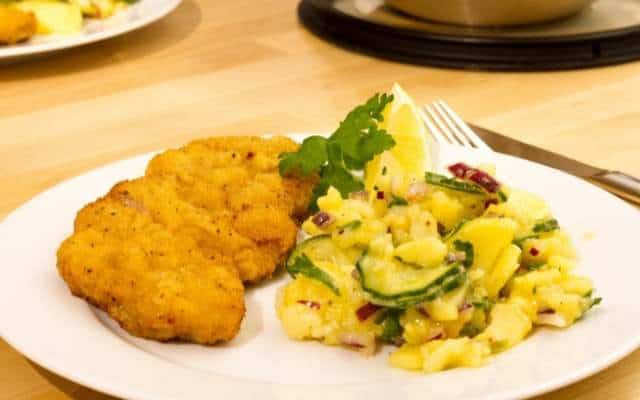
A schnitzel is a flattened cutlet, usually coated in breadcrumbs and fried. Wiener Schnitzel uses veal. Pork and poultry versions also appear on Munich menus, with the meat named separately.
The coating and frying make a difference to the texture. Check the menu if the cut matters to you, since the word schnitzel alone does not promise veal or one fixed cooking fat.
Spätzle and Käsespätzle
Spätzle are soft egg-based noodles or small dumplings made with flour. They accompany sauced dishes, but Käsespätzle makes them the main attraction with melted cheese and onions.
The cheese version is a filling choice for anyone wanting a meal without a large meat joint. For a strict vegetarian meal, ask about the cheese, stock and toppings rather than relying on the dish name alone.
Leberkäsesemmel
A hot slice of Leberkäse in a bread roll is one of our favourite straightforward snacks. Simple, satisfying and delicious. Look in butcher shops and other food counters with a hot section.
Bavarian Leberkäse contains neither cheese nor the liver its name suggests. The Bavarian food register describes a baked mixture of finely processed meat, fat, water, salt and seasoning. Sweet mustard is a common partner.

Pichelsteiner and other stews
Pichelsteiner combines meat and vegetables in a substantial stew. Recipes vary, often using several meats with potatoes and other vegetables. This is the sort of dish to look for when you prefer a bowl of broth and tender ingredients to crisp roast skin.
Beer-garden food beyond pork
Obatzda is a ripe-cheese spread with butter and paprika, usually eaten with a pretzel or bread. Radishes and other vegetables add freshness to a Brotzeit board.
Steckerlfisch is whole fish seasoned and grilled on a stick over charcoal. The fish varies by stand, with mackerel and freshwater species among the choices. Ask what is available rather than assuming every fish grill serves the same species.
At traditional self-service beer-garden tables, bringing your own food is part of the custom, with drinks bought on site. Follow the establishment’s signs because served restaurant areas operate differently. Augustiner-Keller explains its own self-service arrangement.
Ordering a first Bavarian meal
The official Munich food guide and a current tavern menu help connect names with actual plates. For a food-market stop, the Viktualienmarkt lets you choose smaller items from different counters.
Read the sides as carefully as the main dish. Dumplings, cabbage and gravy are not included in every order. Ask about ingredients, portions and the price of a whole joint before committing to a large plate.
Does every meal come with beer?
No. Beer is part of many Bavarian food traditions, but the meal and drink are separate choices. Water, soft drinks and alcohol-free beer are ordinary alternatives.
Which dish is a good small introduction?
A Leberkäsesemmel or pretzel with Obatzda gives you a smaller start. For a full tavern meal, choose a roast, dumplings or Käsespätzle according to your appetite.