
The Hubertusbrunnen is the small stone fountain pavilion at the eastern end of Nymphenburg Canal, on Waisenhausstraße in Neuhausen. Look for the bronze stag inside and St Hubert above it, then follow the canal west towards Nymphenburg Palace. It is a short stop that works best as part of a walk.
Updated
Quick Facts
| Quick fact | Details |
|---|---|
| Where | Waisenhausstraße 20, at the east end of Nymphenburg Canal. |
| Artist | Adolf von Hildebrand. |
| First unveiled | 1907, originally by the Bavarian National Museum. |
| Current location | Rebuilt here in 1954 after removal in 1937. |
| Nearby transport | Bus 144, Hubertusbrunnen; check the current planner. |
| Cost and timing | Outdoor landmark, no museum ticket; water operation is seasonal. |
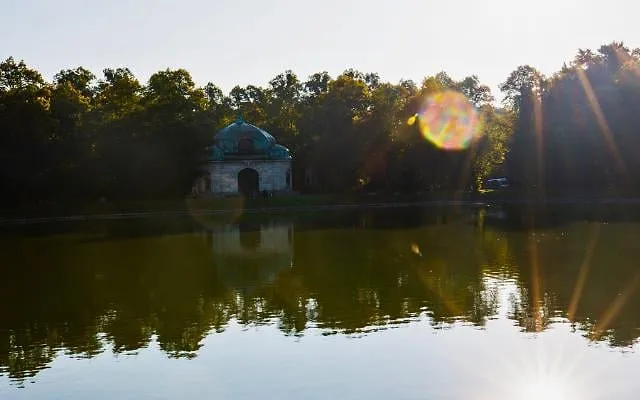
Though overshadowed by the grand Nymphenburg Palace nearby, this small fountain holds its own significance and charm and is certainly worth a quick look if in the area.
We’ve often jogged along the canal here and have appreciated many times the sight of this very interesting watery Munich Landmark.
History of The Hubertusbrunnen
Adolf von Hildebrand designed the fountain for the city of Munich. It was unveiled in 1907, before its later move to the canal.
It first stood in front of the Bavarian National Museum on Prinzregentenstraße. It was a gift from Munich’s citizens to Prince Regent Luitpold in connection with his 85th birthday, rather than a gift from the regent to the city.
However, in 1937 the fountain was removed and did not find its way to its current location at the end of the Nymphenburg Canal until 1954.
The pavilion is built from shell limestone. Inside, a bronze stag with a radiant cross between its antlers stands above a red marble basin. Look outside too: the figures in the niches make the small structure more complex than it first appears.
For Münchners, the fountain holds a special place on the city’s cultural landscape as its very location is so often used for meeting up, walking, relaxing and more!

The Nymphenburg Canal and Hubertusbrunnen’s Place
The long, straight Nymphenburg Canal provides a beautiful reflective backdrop, showcasing Hubertusbrunnen at one of its ends.
The scenic waterway invites jogging, cycling and long strolls along the path. We’ve often jogged the full length of the canal, catching sight of the fountain in the distance.
Surrounded by lawns and trees, the area around Hubertusbrunnen makes an excellent spot for picnics or just relaxing by the water.
Visitors can work up an appetite before satisfying it at one of the nearby beer gardens! Yes it’s Munich so they are everywhere!
The Figure of Hubertus and its Symbolism
The fountain is named after Saint Hubertus, the patron saint of hunters and one of the most revered Christian saints in Germany.
According to legend, Hubertus encountered a stag with a luminous crucifix between its antlers while hunting on Good Friday. This vision spurred his conversion to Christianity. The deer depicted in the fountain references this legendary event.
The statue reminds us of Hubertus’ spiritual significance while also representing the cultural popularity of hunting in Bavaria.
The stag and cross may remind you of the Jägermeister emblem. Both refer to the legend of St Hubert; resemblance alone does not show that this particular fountain inspired the drinks logo.

The Surrounding Area and Attractions
Though not really a destination itself, the Hubertusbrunnen occupies an ideal location near some of Munich’s other landmarks and attractions.
Just down the street (or in this case canal) is the grand Nymphenburg Palace, once home to Bavarian royalty. The palace and its sprawling grounds are a must-see.
Hirschgarten is another possible detour for a larger park and beer-garden outing. Check the distance from your chosen canal route rather than treating all the area’s attractions as immediately next door.
And just to the south is Grünwaldpark – the green lung of the area and an ideal family orientated park.
For dining, beer gardens and restaurants dot the area around Nymphenburg Canal. Visitors can eat, drink and be merry while appreciating the beauty of Hubertus Brunnen and the local area.
How To Get To The Hubertus Brunnen
The Hubertusbrunnen is conveniently located near public transportation, making it easy to access.
Bus 144 stops at Hubertusbrunnen. Alternatively, plan a walk from the U-Bahn around Gern or Rotkreuzplatz using the current MVG route planner. From Marienplatz you will need to plan the appropriate connection rather than expecting a direct U1 train.

A Small Stop on a Canal Walk
With its symbolic statue and well-placed location, Hubertusbrunnen has become a beloved Munich landmark especially because of its very picturesque location at the end of the canal.
Both a monument to a Christian saint and to the cultural heritage of Bavaria, the fountain has artistic, architectural, religious and cultural significance for the city.
Though often overlooked, this hidden gem is worth going out of your way to see, whether jogging along the canal or simply appreciating its beauty.
Read more about Munich Landmarks in this article HERE.
Frequently Asked Questions
Can you still visit when the water is off?
Yes. The pavilion, stag and long canal view remain the reasons to stop. Do not expect fountain water to run through the winter.
Is it next to Nymphenburg Palace?
It marks the eastern end of the long canal, with the palace to the west. Allow time for the canal walk and check palace-park gate hours if continuing inside.